Presenters are strongly encouraged to focus on topics related to the management of caves or karst which may be used to inform resource managers on current practices and methods. Pure research sessions and posters should include a management subtext.
Abstract Submissions Are Open!
Please send your abstracts with up to 3 attached images to abstracts@nckms.org. For questions, please contact Dr. Pat Kambesis of Western Kentucky University and Kirsten Bahr by sending an email to that same address.
If you can include a face picture for the primary presenter and a very brief bio, that would be great! We'd like to post all session topics on this website in advance of the symposium.
Abstract Submissions Close
Abstract submissions will close at midnight on Friday night, September 5, 2025.
Review & Editing
Accepted presenters will be notified soon after submission. Final abstracts must be locked for publication by early-September.
Proceedings Publication
All presenters are reminded that full texts of your sessions must be available at or immediately after the symposium. Official proceedings will be published following the symposium.


The Karst Waters Institute is a 501(c)3 nonprofit institution whose mission is to improve the fundamental understanding of karst water systems for professionals and the public.
The institute works to engage professionals in small conferences and workshops to advance karst science; increase recognition and publication of karst science; foster development of karst professionals; and to communicate and disseminate information to the public.
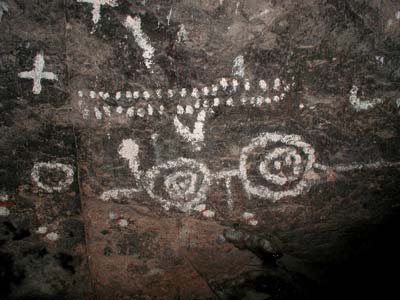
Burrowed in the Toquima Range in the Humboldt-Toiyabe National Forest, Toquima Cave holds massive cultural importance to Native Americans. This sacred site was utilized by the Western Shoshone tribes as a temporary dwelling between 3,000 and 1,500 years ago.
A large number of pictographs adorn the north and south walls of the cave. As one of many pictograph sites in Nevada, Toquima Cave and the surrounding 40 acres were added to the National Register of Historic Places in 2002.