

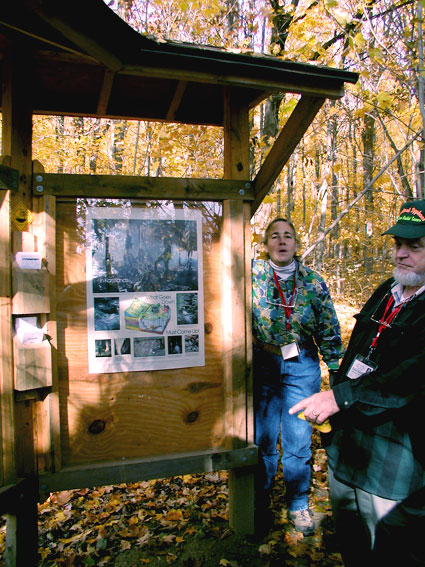
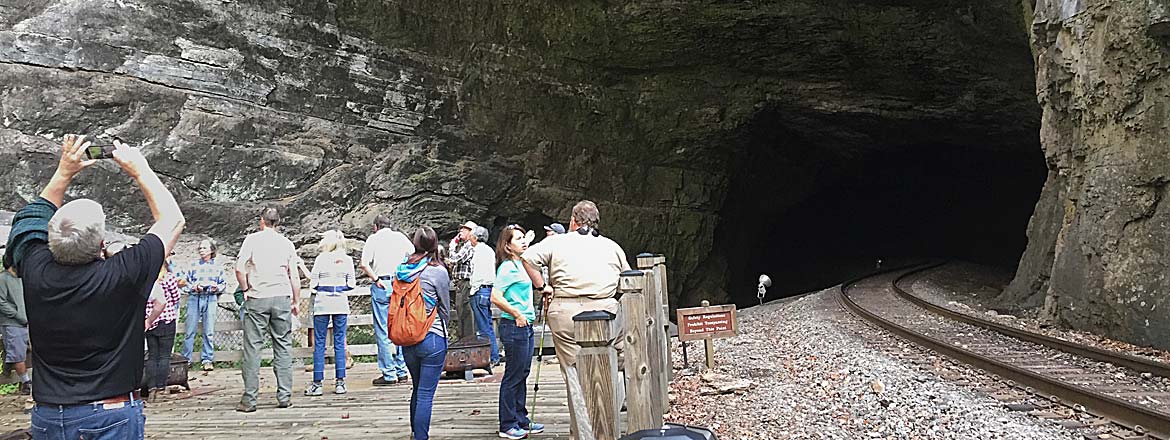
Each NCKMS conference includes at least one regional field trip to local cave and karst features. In 2025, we plan to tour the Lehman Caves at Great Basin National Park and explore some surface hydrology features.
Read MoreHeld every 2 years, the National Cave & Karst Management Symposium is designed to provide an opportunity for cave and karst management professionals to discuss and explore solutions to help protect and conserve caves, karst, cave ecosystems and underground water resources across North America.
Led by a consortium of governmental agencies, each NCKMS conference enourages participation from professionals of diverse backgrounds, working in various fields and with interests spanning a broad range of cave and karst management issues.
The first NCKMS was held in Albuquerque, New Mexico, in 1975, and symposia have been organized on a regular basis since then.
Each symposium publishes the papers presented during the event as a formal proceedings. These have become important references for those involved in cave and karst management. From 1999 onwards, the proceedings are available in various digital formats, and often also as hard copies.
The best resource for finding the proceedings of the NCKMS symposia is to access the Karst Information Portal.
Our NCKMS Steering Committee was formed in 1990 to ensure that a NCKMS is held biennially. The committee selects a group to host each symposium from bids presented, and provides guidance for developing the event. It also offers scholarships to enable attendance to symposia. The committee comprises a representative from each of the organizations and agencies that have a formal interest in, or responsibility for, managing cave and karst resources on a nationwide basis. The committee offers a structure for these influential groups to share ideas and experiences, and to work together to address issues arising in managing caves and karst.


Southwest Geophysical Consulting provides geophysical consulting to industry, ranchers, homeowners and government in karst and pseudo-karst areas of New Mexico and surrounding states,
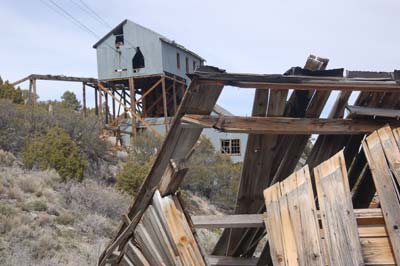
The ghost town of Belmont Mill was established following a silver strike in 1865. Other minerals, such as copper lead and antimony were also mined here. The boom brought in settlers and Belmont grew. The town boasted four stores, two saloons, five restaurants, livery stable, post office, assay office, bank, school, telegraph office, two newspapers, and a blacksmith shop.
As the price of metals fluctuated, so did the fortunes of the town. By 1887, several of the mines closed. Like many towns which are now ghost towns, this one lasted for only a short time.
Some of the buildings are still standing, including the courthouse, the Cosmopolitan Saloon, the Monitor-Belmont Mill, and the combination mill.