

Corporate collaboration between the scientific community and the private sector enables researchers and professionals to connect with industry leaders, creating a platform for the exchange of ideas, technologies, and best practices. This collaboration often results in innovative solutions to real-world problems, driving advancements that benefit both the corporate sponsors and the scientific community.
The 2025 NCKMS team would be happy to custom-design a program to provide your business the maximum of benefit and visibility. Please feel free to reach us at any time at ely2025@nckms.org to discuss how we might integrate your organization into our production.
The 2025 NCKMS production team is still working out details for federally recognized non-profit organizations and related informational displays. We will endeavor to make room for on-topic and cave-related organizations as much as possible. Please reach out to us no sooner than February, 2025.
Merchandise sales, services and consulting, and equipment sales at the 2025 NCKMS conference is strictly limited to sponsors and to the Western Cave Conservancy. Unless specific permission is otherwise granted, non-sponsors will be limited to receiving organizational donations only. Taxes and business licensing regulations of White Pine County, Nevada will be enforced. No food or beverage vendors will be allowed. Additional restrictions may apply.
Image courtesy of Matt Bowers, ThirdMedia.com.


The Cave Research Foundation is a private, non-profit organization dedicated to:
Facilitating research, management and interpretation of caves and karst resources; Forming partnerships to study, protect and preserve cave resources and karst areas; Promoting the long term conservation of caves and karst ecosystems.
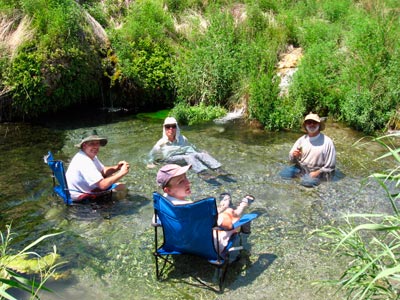
There are 48 miles of perennial streams, and over 400 springs in the South Snake Range, home to Great Basin National Park. Over 75% of wildlife species are dependent upon these riparian areas for food, water, and cover at some stage of their life cycles.