

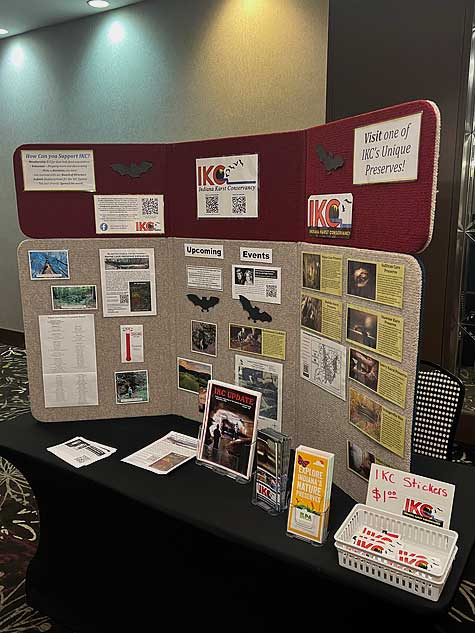
At present, we expect poster sessions will share room space with table displays like this one from the Indiana Karst Conservancy. Symposium sponsors and non-profit organizations are welcome to receive display space pending advance permission from the conference staff. Photo by Matt Selig, IKC.
Presenters are strongly encouraged to focus on topics related to the management of caves or which may be used to inform cave managers on current practices and methods. Pure research sessions and posters should include a management subtext.
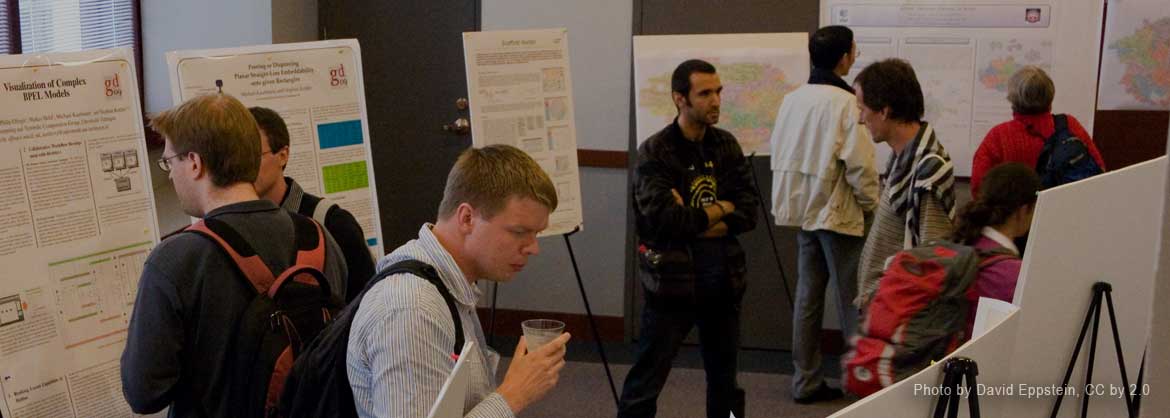
Poster sessions at the 2025 NCKMS conference are tailored to provide a dynamic platform for researchers and management professionals to share their scientific findings and engage in discussions with their peers. Unlike traditional oral presentations, poster sessions involve the display of research findings on large posters that participants can explore at their own pace. Attendees can move freely between posters, engage in one-on-one discussions with presenters, and gain a comprehensive understanding of a wide range of cave and karst management topics.
Poster presenters play a crucial role in facilitating discussions by standing near their displays, ready to explain their work, answer questions, and exchange ideas with symposium attendees. This format encourages a more intimate and direct interaction between researchers, fostering collaboration, networking, and the exchange of valuable insights within our professional community.
Moreover, poster sessions provide an opportunity for participants to discover emerging trends, novel approaches, and potential collaborations in the field of cave and karst management. Attendees can explore a wide range of topics within a relatively short time, gaining exposure to a breadth of research that may not be covered in traditional oral presentations.


Great Basin National Park Foundation passionately works to enhance, preserve, and interpret the starry night skies, wide-open scenery, cultural heritage, and diverse native ecosystems of Great Basin National Park.
The Foundation is the official non-profit partner of Great Basin National Park.
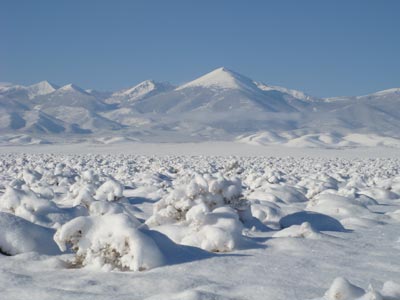
Precipitation patterns are highly variable in Great Basin National Park. The wettest year on record at Lehman Caves was 21.2 inches of precipitation in 1982 and the driest year was 7.4 inches in 1953.